Duolingo Spanish: Family, Clothes and Verbs

I am delighted to be making a new series of Spanish lessons based on the Spanish we can learn from Duolingo. The lessons explain the grammar and show you how you can used what you are learning. Enjoy.

Please download your free PDF of my notes on the units of Spanish Duolingo about family, clothes and the present tense verbs (singular persons), as studied in September 2023.

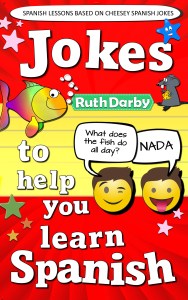
Enjoy reading Spanish you can understand. This book is Spanish lessons based around jokes, written in Spanglish. Have a look today. Click here.

The first lessons in the course are here.

Use Spanish Duolingo sentences about FAMILY
Use Spanish Duolingo sentences about CLOTHES
Understand Spanish Duolingo grammar about PRESENT TENSE VERBS

Duolingo Spanish Notes

I am delighted to be making a new series of Spanish lessons. These ones are based on the Spanish we can learn from Duolingo. The lessons will explain the grammar and show you how you can used what you are learning. Enjoy.

Please download your free PDF of my notes on the first three units of Spanish Duolingo, as studied in September 2023.

Enjoy learning Spanish with these Spanish lessons based around jokes. Easy, cheesy and fun! Get your copy here.

How to do a Spanish Roleplay buying tickets

Follow the notes. Get a friend or relative to read the teacher part, and see how well you do. All the time you will be learning key phrases that will help you in your exam. Good luck.

Watch the video to get pronunciation and top tips for a good grade.

Up your español with this great easy reader that includes tests and puzzles. All within your ability and designed to increase your confidence. Buy it here.

If you would like to listen to more roleplay examples, make sure you watch the grand compilation here. There is a link in the video description if you would like to download all the scripts. Good luck in your exams and I hope you enjoy speaking Spanish when you get the opportunity. ¡Suerte!

GCSE Spanish Speaking Exam Preparation … The Roleplay and The Photocards!

Download the presentation and take the time to copy the phrases that you can use across the board.

Watch the video. This includes all Spanish – English translations.

Navigate to the roleplay of your choice using the chapters on the video.

Learn the questions and use the suggested answers to help you prepare things you want to say.

Navigate the photocards using the chapters on the video.

Improve your confidence in Spanish with easy reading.

Easy Spanish reader

Buy your copy.

Good luck with your GCSE Spanish, and good luck with your studies generally. Ready for more? Try these lessons to keep improving your español.

Get to grip with the best Spanish phrases you will ever learn! Where? Your favourite Netflix series of course!

Enjoy your shows in Spanish with full print outs of the scripts in English and Spanish dual texts.

The future tense in Spanish is easy, and it is a big mark winner. There are only 12 irregulars and they are easy to learn and use.

Learn these 12 irregular verbs in just 3 easy groups. Also enjoy learning how easy the reflexive verbs are in the future.

Please click the like button on my videos to give me a little smile when I check how they are doing. Muchas gracias, Ruth x

Linda’s Learning Journey

I’m learning español because learning un segundo lenguaje (say “len-gwa-he”) later in life is supposed to ayudar con la función cognitiva y reducir los riesgos de desarrollar demencia as we age.  I am very excited to add un segundo lenguaje also because tengo pacientes que hablan español.  Soy un médico de familia en el sur de California so there are quite a lot of Spanish speaking patients, y aunque la mayoría de ellos hablan inglés mucho mejor que yo hablo español, I enjoy being able to at least do part of my visit en su idioma nativo.

Estudié español durante dos años en la escuela primaria and always remembered los saludos and how to introduce myself en español.  When I was young mi padre compró a set of records that had lecciones de español on them, so my brother and I listened to those, a veces los fines de semana o durante nuestras vacaciones de verano, our summer vacaciones.

I took a year of Spanish or two perhaps en la escuela secudaria, aunque honestamente no recuerdo ever attending a class, but I did get an A in it so that was bueno.  And I’ve always just enjoyed aprender palabras nuevas, whether they be en inglés o en español, porque me resulta challenging to improve mi vocabulario in both languages.

In my early fifties I started dating, after un tiempo muy largo of avoiding men después de mi divorcio.  I tended to attract a hombres latinos, which was really kind of fun, y mi español rudimentario me resultaba útil a veces, at times. 

I decided to find una clase, busqué on our local meet-up group, and found a tutor que estaba ofreciendo clases de español para principiantes, beginners, in a neighbouring ciudad.  Nos reunimos en varios restaurantes y usamos un libro that was a Spanish high school level textbook.  I did that durante dos años and then nuestra tutora decidió to move to Boca Raton, Florida, con un hombre she had met on internet dating, por lo que esa clase de fin de semana stopped cuando ella se mudó. 

I then checked mi colegio comunitario local y ofrecieron algo de español conversacional para estudiantes adultos.  So I signed up en la clase de español 1 which met in the evenings after work.  Estaba un poco enamorada del instructor so I really performed very well because I wanted him to see que yo era un estudiante interesada and engaged. 

Participé con mis compañeros de clase, and there were 4 or 5 of us that enrolled para el Español 2, which started a explorar algo del pretérito.  We only had 8 semanas de leccionesand I really didn’t feel que eso fuera suficiente, así que el grupo de nosotros that wanted to seguir estudiando español le pedimos al instructor si podía ofrecer un español 3.  Unfortunately he did not have a contract to do that con el colegio comunitario, pero prometió that if we signed up en Español 2 por segunda vez, nos presentaría al menos 4 lecciones nuevas that would still be acceptable for somebody que fuera nuevo en Español 2.  So that was a lot of fun and got mucha experiencia hablando en voz alta, speaking aloud, answering questions, reading aloud, in a classroom setting.

Once that expired, I tried to attend a un instituto de español local, pero desafortunadamente sus clases realmente no estaban en la hora adecuada.  I had tested into intermediate Spanish and they moved tan rápido que estaba realmente fatigada after each work day that I would go into class and I just found that no podía aprender all of that much.  So en ese momento abandoné la capacitación formal, formal training, and just started watching algunas novelas en la televisión y a comprar libros para niños, that I was familiar with the story line, para leer en español, to kind of further my lessons.  Cuando llegó la pandemia en 2020, I had just begun to study with Duolingo, and I have continued to do that hasta el presente.

También comencé a usar an app called EWA spelled EWA, and it has very nice little vignettes that are pulled from various movies and cartoons and things.  They overlay it and overdub it en españoland so they go over greetings and things and so you get to a hablantes nativos hablando español de diferentes regiones, so you get a different way of hearing gracias or grathias, and so it kind of helps to attune my ear con los diferentes tipos de hispanohablantes.

También vi los videos de Spanglish Fantástico en YouTube, and I bought the Pasos books, y esa es una de mis intenciones para este año, is to work through el currículum completo de Pasos, porque me gusta escucharte, because I do like listening to you Ruth, hablar en español.  Hablas con lentitud y claridad y enuncias muy bien, and I find that that helps me to be less hesitant a la hora de intentar hablar en español.  Because I’ve heard it at a un ritmo que puedo asimilar, I know how the word sounds and how the various stresses fall dentro de cada palabra. 

No hablo otros idiomas aparte del inglés.  Yo hablo inglés nativo.  En mi comunidad, hay muchos latinos, or as they like to call themselves aquí en el sur de California, LatinX people.  My housekeeper es de Guatemala, un país centroamericano.  My mother’s handyman y su familia son de México.  They used to live with my parents cuando eran nuevos en este estado, to this state.  My mother helped Berta, la madre, a estudiar para obtener citizenship aquí en los Estados Unidos, and my parents also loaned dinero a su familia to buy their first home in our area, así que tengo mucha interacción con personas que hablan español as their first language. 

I do use José and his son, Josecito, to help me a mejorar mi conversación en español.  I usually try to speak to them half en español.  I’m not afraid to ask, “¿cómo se llama …?” something, or “did I say that right?”  José me dice que mi pronunciación en español es bastante buena, so that makes me feel good coming de un hablante nativo.  Y tengo pacientes que hablan español and are willing to put up with me when I try to hablar español con ellos, so I really appreciate that.  I do hear español con frecuencia donde vivo.  Again, nuestro jardinero es español, our handyman is Spanish, my mother’s housekeeper habla español; ella también es de México. 

I listen to Spanish radio a veces in my car.  It’s always fun to hear esta descripción muy larga y rápida de algo, and hear them say, “in Von’s Market,” en un inglés muy claro, so I find that to be delightful.  Me encanta la música pop latina.  Hay varios grupos que escucho con frecuencia, como Camila, Reik, Maná y Sin Bandera.  También Enrique Iglesias, Carlos Vives y Shakira.  I have a few Spanish movies, mostly from México, that I will watch, y tienen subtítulos en inglés, así que puedo seguirlas.  la primera temporada de Narcos, en streaming, and it was just a little too violento, although I enjoyed the listening a los hispanohablantes.

I still feel rather hesitant en entablar una conversación con personas que no conozco porque me falta confianza in my ability to think as I go.  Although I will say que practico hablar español en mi automóvil con los conductores estúpidos around me.  I will curse at them en español, or I will try de identificar diferentes formas de transporte, como “hay un autobús” o “hay un metro, ” o cosas así.  I’ll say, there’s this, there’s that. Trato, o intento, de identificar las cosas y practicar el vocabulario de esa manera. 

Tengo muchos textos en español con los que podría practicar.  Definitivamente quiero pasar por todo el programa Pasos con tus videos de YouTube.  También hay varias otras series que puedo hacer.  I really like having workbooks where there may be una historia en la que tienes que fill in the blank, o escribir essays.  Those are really hard to come by, or at least, I found them difíciles de encontrar.  Me gusta written homework.  Cuando estaba in the meet up había una serie de ejercicios al final de cada capítulo y me encantaba hacerlos.   I would hand write them and then I would type them on the computer para acostumbrarme a encontrar los acentos correctos within a word, or how to flip la puntuación para que fuera correcta en español, así que eso me gustó mucho.

Creo que probablemente siempre seré a life long learner for Spanish.  Realmente no siento que pueda hacer the tenses other than the present, de una manera que me permita llamarme a true intermediate.  Hopefully with time I will gain la confianza para intentarlo más, because saying, ya sabes, “ I went to the store yesterday,” and pointing back like I’m expecting somebody to realise that when I point over my shoulder me refiero a ayer.  It would be nice tener mucha más fluidez in that capacity.  So I’m hoping these little vignettes I’m giving you sean útiles para su proyecto.

No pressure = better learning

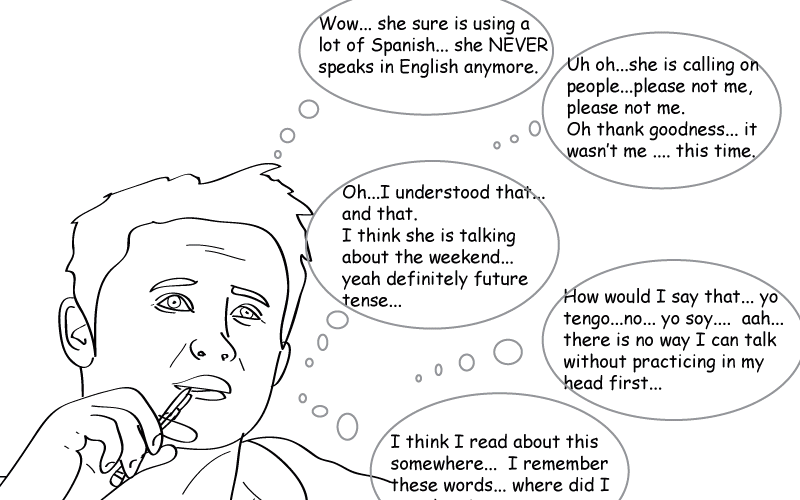
Pressure. Si estudias español, y si quieres hablar español, pues PRESSURE puede ser un problema. Hay una cosa que se llama “the affective filter”. ¿Qué es “the affective filter”? Simply put, it’s how the ability to aquire language decreases when we feel estresado.

Entonces se puede aprender más, y mejor, cuando estás cómodo y relajado. Por eso no tienes que hablar si no quieres, porque se puede aprender al escuchar sin hablar. El nivel del español que entiendes, normalmente es mucho más alto del español que hablas. Para evitar el estrés se puede mezclar, mix, español con inglés, porque es mejor usar el español que sabes y completar el mensaje con inglés. Y tambén por eso no importa si no entiendes todo: en mi opinión es más importante to focus on what you do understand.

Al repasar la clase de esta semana, encontré muchas frases útiles para hablar de los sentimientos que se puede sentir cuando uno quiere usar su español para hablar. La mayoría de ellas se puede usar para “comprar tiempo”. Quiero compartirlas con ustedes. Aquí están.

  • No puedo decirlo en español = I can’t say it en español
  • Quiero decir algo = I want to say something
  • ¿Qué es “to speak”? = What’s “to speak?”
  • Dímelo tú = You tell me
  • No sé = I don’t know
  • Toma tu tiempo amigo = Take your time
  • Sí se puede = You can do it
  • ¿Qué quieres decir? = What do you want to say?
  • ¿Está bien? = Is that ok?
  • Dame una pista = Give me a clue
  • Espera = Wait
  • No te preocupes = Don’t worry
  • No importa = It doesn’t matter
  • No entiendo = I don’t understand
  • ¿Puedes decirlo en español? = Can you say it en español?
  • Un momento, estoy pensando = One moment, I am thinking
  • Dímelo en español = Tell me in Spanish
  • No puedo pensar del verbo = I can’t think of the verb
  • No me acuerdo = I don’t remember
  • He olvidado = I have forgotten

Pienso que se puede sentir más relajado si se sabe que está bien decir frases como las de arriba, y cuando se sabe decirlas en español. A veces una persona solo necesitar un poquito más tiempo para pensar. En mi clase quiero ofrecer este tiempo para formular las frases en español. Entonces necesito una lista de frases para mi, como profesora. Tengo unas ideas aquí abajo.

  • ¿Qué quieres decir? = What do you want to say?
  • ¿Sabes la palabra …? = Do you know the word …?
  • Pienso que sabes = I think you know
  • Espera. En inglés dices … ¿Y en español?
  • Se dice … Repite conmigo = You say … Repeat with me
  • Toma tu tiempo = Take your time
  • No entiendo. No hablo inglés = I don’t understand. I don’t speak English

Para mi los errores no importan si puedo entender. Mi sueño es que todo el mundo que quiere hablar español siente cómodo para usar el español que se sabe. No me importa que la gente habla español mezclado con el inglés … Por eso he llamado mi trabajo “Spanglish Fantástico.”

Perdóname, escribo mucho en español. Ojalá, I hope, que pueda comprender algunas ideas mías. Díme lo que tú piensas en los comentarios si quieres.

Hasta pronto.

Enseño español; aprendo escuchar

(I teach Spanish; I learn to listen)

La semana pasada comencé una clase de español con dos estudiantes. Es difícil para mí, escribir esto. Orgullosa = proud, y no estoy orgullosa de mi clase. Avergonzada (a ver gon za da) = ashamed. Estoy avergonzada.

Grabé = I recorded. Grabé la clase y escuché y transcribí lo que dijimos.

Decir = to say.

  • Dije = I said
  • Dijiste = you said
  • Dijo = he/ she/ you said
  • Dijimos = we said
  • Dijisteis = you said
  • Dijeron = they/ you said

Fue horible. It really was! Yo hablé mucho, y quiero decir MUCHO y hablé en inglés con pocas palabras en español. Querría dar una clase en Spanglish pero cuando escuché la clase I simplemente heard myself hablando over los estudiantes por mucho tiempo. Necesito mejorar mi técnica. Mejor = better. Mejorar = to get better. Tengo unas ideas de como yo puedo mejorar mi clase.

Los estudiantes hablan español. Una señora ya tiene su GCSE. Un señor visita España mucho y cuando él está en España, habla español. No obstante = however. No obstante, la semana pasada no hablaron mucho español. No fue fácil para ellos porque yo siempre estaba hablando. Cuando hablaron, hablaron en inglés principalmente. Exigí = I called for/ demanded. Yo no exigí que hablaran en español. Entonces la primera cosa que debo hacer esta semana, después de ofrecerles mis disculpas, es exigir que hablan en español.

¿Cómo puedo exigir que hablan en español?

Puedo decir varias cosas. Tengo unos ejemplos aquí.

  • Hablar en español es más difícil que hablar en inglés. Toma su tiempo. No me importa si escriben notas para preparar. No me importa si usted dice algo en inglés y luego pensamos juntos, together, de como decirlo en español. Pero el mensaje principal es toma su tiempo.
  • Entiendo que en una conversación quieres decir algo y que, tomando el tiempo necesario significa que el momento habrá pasado. Pero una clase de español no es una conversación normal. El gol es soltar la lengua, to loosen the tongue. El momento no habrá pasado. Hasta que usted diga su mensaje en español el momento no habrá ocurrido.
  • Si realmente quieren hablar en inglés, está bien. Les puedo pedir que hablen lentamente. Puedo decir, “¿Cómo se dice esto en español?” Puedo tomar notas y les puedo sugerir como se puede comenzar a expresar su mensaje en español. “Usted dijo we are out there in January so it will be quite interesting. ¿Sabe decirlo en español? Se puede decir simplemente we are there in January so it will be interesting. ¿Cómo se dice esto?” Pienso que la estudiante puede lograr decir frases así en español sola. Sino, pues, en la clase lo podemos hacer juntos. Lograr = to achieve. Juntos = together.

Escuché el registro de la clase que grabé, y estaba avergonzada pero estoy muy feliz que lo hice, porque así la próxima clase tiene la posibilidad de ser mejor: más útil. Transcribí lo que dije (y lo que los estudiantes dijeron, pero principlamente estaba yo hablando). Al escuchar, me di cuenta que lo que digo no es lo más importante: lo más importante es lo que no digo. Aparece = it appears. En mis notas aparece la frase “cállate y escucha.”

Entonces para preparar lo clase de esta semana he escrito “¿Qué opinan?” muchas veces en mis notas. Preguntas = questions. Las preguntas pueden dar más oportunidades para hablar de un lado, y para escuchar del otro lado (mi lado = my side).

Recientemente compré el libro “The seven habits of highly effective people” by Steven Covey. Me gusta mucho. Se lo puede comprar en español también. Los siete habitos de la gente altamente efectiva. Irónicamente no puedo encontrar mi copia. Bueno, no importa porque es fácil encontrar lo que dice en la red, the internet. Steven Covey habla de escuchar. Dice, “La mayoría de las personas no escuchan con la intención de entender; escuchan con la intención de responder.” Y eso fue mi problema en la clase de español de la semana pasada.

Para mejorar mi clase tengo que escuchar con la intención de entender. No importa que idioma usamos, la comunicación entre humanos comienza con la intención de entender. Aunque = although. Y en mi próxima clase, aunque tengo temas, preguntas y técnicas preparadas, lo más importante para mi no es lo que enseño, si no lo que escucho y lo que entiendo.

Ojalá que pueda mejorar. Enseño español. Aprendo escuchar.

Neil Oliver on Jeremy Vine. Thoughts from a Spanish teacher.

On Saturday night un amigo talked about a great bit of radio he had heard recently called “What makes us human.” So we listened to it on the BBC app, and I liked it a lot. Neil Oliver, the historian and archeologist who presenta el programa Coast was talking about how la percepción of time is what makes us humano.

One of the things Neil Oliver said was this: “By definition history is the written word: books, diaries, letters, gravestones … But that’s only 5, 6, 7 thousand years old. Our species alone is 200 thousand years old. So there’s 195 thousand years of homo sapiens that’s pre-literate.”

En español that is, más o menos: “Por definición, historia es la palabra escrita: libros, diarios, cartas, lápidas … Pero eso solo tiene 5, 6, 7 mil años. Nuestra especie tiene 200 mil años. Entonces hay 195 mil años de homo sapiens que no sabían leer ni escribir.”

I am a Spanish teacher y me interesa learning without papel, or at least, learning with great reduction in the dependencia on papel. I went to a singing clase con la fantástica Caro Fentiman and felt inspirada and uplifted, a feeling I put down in part to how little we used paper. Simplemente, it gives you la oportunidad to make más contacto con la gente, with the people. So I started to crear clases que no dependen de la palabra escrita, the written word.

Knowledge and learning are not the exclusive domain of those who feel cómodos con la palabra escrita, the written word. Schools and universidades are absolutamente dominated by personas who saben leer y escribir muy bien, who know how to read and write very well. But I have met adultos who are muy elocuentes, informados y persuasivos who did not do well in classrooms because they don’t like leer y escribir, reading and writing. They are skilled learners who speak and listen to give and recibir la información. They have low confianza about their abilities to learn from un profesor, basado on their experiencia en la escuela, at school.

Most of la existencia de los humanos has been without la palabra escrita, and those humanos, who did not know how to leer y escribir, survived. We can especular, speculate that they shared crafts, stories and songs. Their abilities as actors, songsmiths, playwrights, persuaders, pacifiers and politicians might have far outstripped our own. Our forebears’ memory skills might astound us. We will never know.

We can be pretty sure, though, that for 195 mil out of 200 mil years, humanos lived and learned without text. Now I teach español, and my question is:

Is reading and writing, leer y escribir, the best way to teach and learn lenguaje?

This is la cuestión that I want to address through my work as profesora and escritora (comprendo la ironia) and I want to considerar esa cuestión from una variedad de ideas.

  • Los niños learn their first lenguaje very effectively and rápidamente. They do this orally. Can we emulate esa experiencia in a non-immersion clase?
  • Leer y escribir is slow en comparación con thinking and speaking. Is it good to slow down la comunicación, or is it good to speed it up?
  • Most people pasan más tiempo listening and speaking every day than they do leer y escribir, reading and writing. Listening and speaking are older skills, more connecting skills, and they are the primary skills that learners of a second lenguaje want to be able to use.
  • Speaking and listening allows for a greater potential to conectar with estudiantes, which is why I find clases that don’t rely heavily on papel más inspiradoras. That, and the fact that when I have experienced “no paper clases” I leave con la impresión that I have really achieved en el presente. With learning on papel I sometimes feel that the learning has yet to be done, that I have been given a tool to take and learn from en el futuro.

We all learned to listen and speak. We learned to look at each other and smile. We learned to make friends. We learn new words by hearing them, often many times before we decidimos to use them for ourselves. Just like our ancient ancestors, our ancestros antiguos before us. Now I want to do that en mis clases de español. I am un poco nerviosa about los adultos because they will turn up with expectations, notebooks, pens and papel. I hope to win them over to el hábito of learning without these things. Por el contrario, I am completamente relajada about teaching los niños, the children this way. I have already comenzado clases con los niños and they seem completamente on board.

As a final thought, if we were able to meet a pre-historic, pre-literate persona, how would they teach us? Es obvio, right? And would it be wise for us to try to teach them the same way? What is your opinión?