Beyond the Streak: How to Turn Duolingo Words into Usable Vocabulary

Successful Spanish Students

Duolingo is great.

  • It is free
  • It is easy
  • It feels like a game

… BUT … lots of people get a very long way into their streak before they are able to produce Spanish (or whatever other language they are learning) from memory.

If I study Spanish every day for 50, 100, or 365 days, I want to be able to reel off a massive quantity of Spanish words at will, on demand. I don’t just want the receptive skills of being able to recognise familiar Spanish words I hear or read; I want the productive skills of being able to write Spanish words on a blank piece of paper, or speak my own Spanish words out of thin air.

The same things that apply to the Duolingo app (free, easy, game-feel) apply to making the words stick, so here is how to do it.

Step 1

Write down the words in Spanish and English as you go through them. Pen and paper is fine. I put mine in a Word Doc. Whatever is quick and easy for you!

Step 2

When you have your list, cover the English and recall what the words mean. Cover, translate, recall, and cover again. You are practicing RECALL (and that’s what matters!)

Step 3

Make a note of the words you couldn’t recall. You can use a scale … ** can mean zero recall, and * can mean imperfect recall. Test these again another day.

This method of learning vocab is free … all you need is a pen and paper.

It is also easy … note down words while you are on the app, and test yourself afterwards.

It is fun … there is something satisfying about getting good marks on your tests. It is even more satisfying if you have had to work for it and you get your good marks on the second or third attempt.

One last thing …

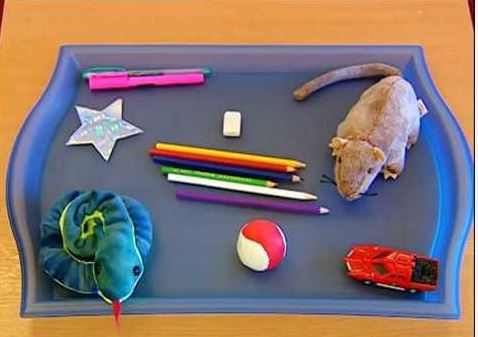
Do you remember playing Kim’s game as a child? A tray with several items on it was studied, then covered, and one item was removed. The aim was to figure out what had gone.

As you learn Spanish, try to memorise word lists in English. Then recall the English and the Spanish from thin air. Give yourself a blank sheet of paper and nothing more, and see how many Spanish words from your list you can remember.

Have fun!

Duolingo Spanish: Family, Clothes and Verbs

I am delighted to be making a new series of Spanish lessons based on the Spanish we can learn from Duolingo. The lessons explain the grammar and show you how you can used what you are learning. Enjoy.

Please download your free PDF of my notes on the units of Spanish Duolingo about family, clothes and the present tense verbs (singular persons), as studied in September 2023.

Enjoy reading Spanish you can understand. This book is Spanish lessons based around jokes, written in Spanglish. Have a look today. Click here.

The first lessons in the course are here.

Use Spanish Duolingo sentences about FAMILY
Use Spanish Duolingo sentences about CLOTHES
Understand Spanish Duolingo grammar about PRESENT TENSE VERBS

Duolingo Spanish Notes

I am delighted to be making a new series of Spanish lessons. These ones are based on the Spanish we can learn from Duolingo. The lessons will explain the grammar and show you how you can used what you are learning. Enjoy.

Please download your free PDF of my notes on the first three units of Spanish Duolingo, as studied in September 2023.

Enjoy learning Spanish with these Spanish lessons based around jokes. Easy, cheesy and fun! Get your copy here.

Linda’s Learning Journey

I’m learning español because learning un segundo lenguaje (say “len-gwa-he”) later in life is supposed to ayudar con la función cognitiva y reducir los riesgos de desarrollar demencia as we age.  I am very excited to add un segundo lenguaje also because tengo pacientes que hablan español.  Soy un médico de familia en el sur de California so there are quite a lot of Spanish speaking patients, y aunque la mayoría de ellos hablan inglés mucho mejor que yo hablo español, I enjoy being able to at least do part of my visit en su idioma nativo.

Estudié español durante dos años en la escuela primaria and always remembered los saludos and how to introduce myself en español.  When I was young mi padre compró a set of records that had lecciones de español on them, so my brother and I listened to those, a veces los fines de semana o durante nuestras vacaciones de verano, our summer vacaciones.

I took a year of Spanish or two perhaps en la escuela secudaria, aunque honestamente no recuerdo ever attending a class, but I did get an A in it so that was bueno.  And I’ve always just enjoyed aprender palabras nuevas, whether they be en inglés o en español, porque me resulta challenging to improve mi vocabulario in both languages.

In my early fifties I started dating, after un tiempo muy largo of avoiding men después de mi divorcio.  I tended to attract a hombres latinos, which was really kind of fun, y mi español rudimentario me resultaba útil a veces, at times. 

I decided to find una clase, busqué on our local meet-up group, and found a tutor que estaba ofreciendo clases de español para principiantes, beginners, in a neighbouring ciudad.  Nos reunimos en varios restaurantes y usamos un libro that was a Spanish high school level textbook.  I did that durante dos años and then nuestra tutora decidió to move to Boca Raton, Florida, con un hombre she had met on internet dating, por lo que esa clase de fin de semana stopped cuando ella se mudó. 

I then checked mi colegio comunitario local y ofrecieron algo de español conversacional para estudiantes adultos.  So I signed up en la clase de español 1 which met in the evenings after work.  Estaba un poco enamorada del instructor so I really performed very well because I wanted him to see que yo era un estudiante interesada and engaged. 

Participé con mis compañeros de clase, and there were 4 or 5 of us that enrolled para el Español 2, which started a explorar algo del pretérito.  We only had 8 semanas de leccionesand I really didn’t feel que eso fuera suficiente, así que el grupo de nosotros that wanted to seguir estudiando español le pedimos al instructor si podía ofrecer un español 3.  Unfortunately he did not have a contract to do that con el colegio comunitario, pero prometió that if we signed up en Español 2 por segunda vez, nos presentaría al menos 4 lecciones nuevas that would still be acceptable for somebody que fuera nuevo en Español 2.  So that was a lot of fun and got mucha experiencia hablando en voz alta, speaking aloud, answering questions, reading aloud, in a classroom setting.

Once that expired, I tried to attend a un instituto de español local, pero desafortunadamente sus clases realmente no estaban en la hora adecuada.  I had tested into intermediate Spanish and they moved tan rápido que estaba realmente fatigada after each work day that I would go into class and I just found that no podía aprender all of that much.  So en ese momento abandoné la capacitación formal, formal training, and just started watching algunas novelas en la televisión y a comprar libros para niños, that I was familiar with the story line, para leer en español, to kind of further my lessons.  Cuando llegó la pandemia en 2020, I had just begun to study with Duolingo, and I have continued to do that hasta el presente.

También comencé a usar an app called EWA spelled EWA, and it has very nice little vignettes that are pulled from various movies and cartoons and things.  They overlay it and overdub it en españoland so they go over greetings and things and so you get to a hablantes nativos hablando español de diferentes regiones, so you get a different way of hearing gracias or grathias, and so it kind of helps to attune my ear con los diferentes tipos de hispanohablantes.

También vi los videos de Spanglish Fantástico en YouTube, and I bought the Pasos books, y esa es una de mis intenciones para este año, is to work through el currículum completo de Pasos, porque me gusta escucharte, because I do like listening to you Ruth, hablar en español.  Hablas con lentitud y claridad y enuncias muy bien, and I find that that helps me to be less hesitant a la hora de intentar hablar en español.  Because I’ve heard it at a un ritmo que puedo asimilar, I know how the word sounds and how the various stresses fall dentro de cada palabra. 

No hablo otros idiomas aparte del inglés.  Yo hablo inglés nativo.  En mi comunidad, hay muchos latinos, or as they like to call themselves aquí en el sur de California, LatinX people.  My housekeeper es de Guatemala, un país centroamericano.  My mother’s handyman y su familia son de México.  They used to live with my parents cuando eran nuevos en este estado, to this state.  My mother helped Berta, la madre, a estudiar para obtener citizenship aquí en los Estados Unidos, and my parents also loaned dinero a su familia to buy their first home in our area, así que tengo mucha interacción con personas que hablan español as their first language. 

I do use José and his son, Josecito, to help me a mejorar mi conversación en español.  I usually try to speak to them half en español.  I’m not afraid to ask, “¿cómo se llama …?” something, or “did I say that right?”  José me dice que mi pronunciación en español es bastante buena, so that makes me feel good coming de un hablante nativo.  Y tengo pacientes que hablan español and are willing to put up with me when I try to hablar español con ellos, so I really appreciate that.  I do hear español con frecuencia donde vivo.  Again, nuestro jardinero es español, our handyman is Spanish, my mother’s housekeeper habla español; ella también es de México. 

I listen to Spanish radio a veces in my car.  It’s always fun to hear esta descripción muy larga y rápida de algo, and hear them say, “in Von’s Market,” en un inglés muy claro, so I find that to be delightful.  Me encanta la música pop latina.  Hay varios grupos que escucho con frecuencia, como Camila, Reik, Maná y Sin Bandera.  También Enrique Iglesias, Carlos Vives y Shakira.  I have a few Spanish movies, mostly from México, that I will watch, y tienen subtítulos en inglés, así que puedo seguirlas.  la primera temporada de Narcos, en streaming, and it was just a little too violento, although I enjoyed the listening a los hispanohablantes.

I still feel rather hesitant en entablar una conversación con personas que no conozco porque me falta confianza in my ability to think as I go.  Although I will say que practico hablar español en mi automóvil con los conductores estúpidos around me.  I will curse at them en español, or I will try de identificar diferentes formas de transporte, como “hay un autobús” o “hay un metro, ” o cosas así.  I’ll say, there’s this, there’s that. Trato, o intento, de identificar las cosas y practicar el vocabulario de esa manera. 

Tengo muchos textos en español con los que podría practicar.  Definitivamente quiero pasar por todo el programa Pasos con tus videos de YouTube.  También hay varias otras series que puedo hacer.  I really like having workbooks where there may be una historia en la que tienes que fill in the blank, o escribir essays.  Those are really hard to come by, or at least, I found them difíciles de encontrar.  Me gusta written homework.  Cuando estaba in the meet up había una serie de ejercicios al final de cada capítulo y me encantaba hacerlos.   I would hand write them and then I would type them on the computer para acostumbrarme a encontrar los acentos correctos within a word, or how to flip la puntuación para que fuera correcta en español, así que eso me gustó mucho.

Creo que probablemente siempre seré a life long learner for Spanish.  Realmente no siento que pueda hacer the tenses other than the present, de una manera que me permita llamarme a true intermediate.  Hopefully with time I will gain la confianza para intentarlo más, because saying, ya sabes, “ I went to the store yesterday,” and pointing back like I’m expecting somebody to realise that when I point over my shoulder me refiero a ayer.  It would be nice tener mucha más fluidez in that capacity.  So I’m hoping these little vignettes I’m giving you sean útiles para su proyecto.

La salud mental no es la única historia.

Spanglish is a bridge to Spanish

Medline Plus, publicado por el gobierno de Los Estados Unidos, dice que la salud mental incluye our wellbeing wellbeing is a great word en español: bienestar) … la salud mental incluye nuestro bienestar emocional, psicológico y mental. Las historias de personas who have suffered poor salud mental are being publicado mucho más, hoy en día, y está bien.

I recognise that talking about la salud mental es muy importante porque it could help someone who is in a dark place to feel that they are not alone. It could inspire someone con dificultades to look for help. Puede reducir el sufrimiento. Puede evitar otro suicidio. Es muy importante.

Las conversaciones sobre la salud mental pueden ocurrir in any context. Por ejemplo, I made 100 video Spanish lessons in 100 days during lockdown. I feel good about that body of work, so I wrote to el periódico local, The Northumberland Gazette, para hablar con ellos sobre mi canal de YouTube. I wanted un poco de publicidad, claro. Hablé con una periodista durante cuarenta minutos. Hablé de la rutina that I made for myself during lockdown. Fue una rutina que incluyó working from home, supporting my child with home-learning, gardening, and creating an introductory curso de cien clases de español.

La periodista asked me about how creating las clases había afectado mi salud mental. I told her the truth. It was good for me to keep busy. Era bueno tener un tipo de obligación. It made me change my outfit every day. It focussed mi atención en algo que me absorbe, que me inspira, que es mi vocación. I created las clases por los estudiantes who can’t get to learning centres por las restricciones de Covid diecinueve. Hablé about the need to fill los espacios in our social lives, with learning español being una opción. Hablé de la comunidad online that was so good to be part of. She talked with me durante mucho tiempo y estoy super contenta con el artículo. The focus, definativamente, el enfoque es la salud mental.

I work in a school y soy madre soltera. Claro, adoro las largas vacaciones, although I sometimes struggle, and when I do, no es justo por mi hija. Cuando yo sufro con la ansiedad, anxiety, ella sufre conmigo. I suppose (… that is a wonderful word en español, I suppose = supongo) … supongo que sufro la ansiedad durante las vacaciones largas por not knowing what to do with myself. I start to feel that I lack purpose y comienzo a girar en espiral.

The first lock down era aún más larga que las vacaciones más largas. I had plenty of work to do, but I managed to fit in making los videos by getting up early. After all, going to bed early no era problema … I wasn’t going to be missing out on any big fiestas. The videos meant I never ran out of tasks. They helped me to formar relaciones, con personas around the world who are interested in learning español, at a time when I might have felt isolated. They gave me something to worry at, instead of nagging my child. Ansiedad no era un problema para mí and a large part of that was writing the scripts, learning them, recording them and publishing them. I was too busy to worry.

La salud mental no es la única historia.

Just as la salud mental no es la única historia, los periódicos no son los únicos medios para publicar una historia hoy en día (nowadays en inglés). Así que yo he decidido escribir la otra parte de la historia about Spanglish Fantástico here, en mi página. Es una historia sobre lenguaje. Es una historia sobre español, sobre learning and teaching español. Es una historia sobre using two lenguajes … inglés y español … at the same time to make understanding el español easier, and to make learning el español más rápido. Es una historia importante for anyone who wants to learn (aprender) or teach (enseñar) el español.

En los años setenta y ochenta, linguist Stephen Krashen wrote his hipótesis sobre la adquisición de un segundo idioma. El elemento más importante, according to Krashen, is what he called “comprehensible input.” In a nutshell, la idea es que we only truly increase our linguistic compentencia when we understand meaningful mensajes in the target lenguaje. Krashen recomienda que beginners should have lots of input from a teacher, un profesor, y también recomienda that demand for learners to produce mensajes in the target lenguaje is low. The focus is on understanding meaning.

Cut to 2006, the year my daughter was born (and I decided to formalize my knowledge of Spanish at the Open University). My daughter got plenty of comprehensible input. Yo le hablaba en español un poco. I had Sky television which, at the time had un canal en español. I recorded los programas para niños and put them on for mi hija to watch; she loved la televisión. When I had my summer school en Santiago de Compostela, una ciudad en el norte de España, I brought back Spanish language versions of children’s programmes from Pocoyo to The Little Princess to Los TeleTubbies. A mi hija le encantaban. She loved them. Her first Spanish words, at the age of 18 months, were a direct quote from Po, the red Telly Tubby: “un mano, dos manos; una pierna, dos piernas.” She said it when we were out for a walk, and she had to repeat herself 2 or 3 times (un mano = one hand, una pierna = one leg … and she gave me the acciones to help me, “un mano, dos manos; una pierna, dos piernas.”) … until por fin I understood that she was hablando español!!!

We made un buen comienzo, mi hija y yo. I bought Spanish language story books. Although la televisión, la música y las conversaciones con un poco de español were no problem for her, she didn’t much like being read to en español. There were words I had never used with her, and there wasn’t the visual or musical stimulation to carry them along. I decided to compromise, and I read the words I knew she could recognize en español. I filled the gaps con inglés. She would have preferred me to drop el español and just use el inglés, but she at least was willing to accept my Spanglish version. She was not willing to accept español puro. This was when I first developed a type of Spanglish to teach Spanish. La idea of using Spanglish for beginners took root en mi mente.

I started work again en 2009, teaching español for Northumberland County Council, using español when estudiantes could understand it, and using inglés to fill the gaps. I loved it. Teaching adultos es un placer, de verdad. I used the Pasos Spanish for beginners’ course as a starting point to build mis clases, y los estudiantes enjoyed su tiempo y sus estudios. Although I was using Spanglish, I had not yet formed la idea that los estudiantes could, and perhaps should use Spanglish too.

Soy una persona extremadamente lenta. I am slow. I feel slow. I think slowly. I can be realmente lenta en darme cuenta … slow to realize things that are glaringly obvious! I started using Spanglish to teach my daughter in 2007, 2008. I used Spanglish to teach in my job for county from 2009. In 2015, 2016 I wrote Spanglish Fantastico, a conversational style, easy introduction to Spanish, that uses every oportunidad to expose the reader to Spanish he or she can understand. I wrote it because I wanted to adapt of Krashen’s comprehensible input for beginners and Spanglish seemed to be la solución perfecta. And yet it wasn’t until lockdown in 2020 that I began in earnest to encourage estudiantes to speak Spanglish as a bridge to communicating en español. Soy muy lenta … but I am persistente también.

Esa persistencia got me to completar the full 100 Days. (En realidad, it might have taken me 102 days … I do remember having un fin de semana off at one point!) 100 Days of Spanish wasn’t all though. I became co-admin of a Facebook grupo que se llama Learn Spanish Through Spanglish, which has nearly 1700 miembros. I met another author, Dan Hall, who has created un libro que se llama My Complete Spanish Language Learning Journal. He agreed that the idea of using a combination of lenguajes para optimizar la cantidad de español that a learner can comprender es una buena manera to get the comprehensible input que los humanos necesitamos para adquirir un segundo lenguaje. Dan invited me onto his YouTube channel to interview me about code swtiching as a language teaching and learning tool. He even managed to get a live stream of one of my regular viewers, Sara Feliz, who is moving to España and who is learning Spanish through Spanglish conmigo. Fue una hora muy emocionante para mí, and you can see the whole interview here.

The best thing about the 100 Days Series was los estudiantes. Estudiantes maravillosos … personas maravillosos who were commenting on los videos, sending mensajes through Facebook and writing emails … all in beautiful, confident Spanglish. Los estudiantes como Sara Feliz who talked with Dan and I in the interview, y como John Adam who has supported and followed my work since I began with mi primer video, día número uno on the 4th of abril 2020. So many beautiful people, John Shaw, John Callery, usan español. Talie Jean de Chattanooga en Tennessee, y Linda Crawford de Pasadena en California … all over el mundo people are finding that they can usar mucho más español when they allow themselves to usar inglés to fill the gaps. I have found myself saying “gracias” more than ever (gratitude is very good for el bienestar which means wellbeing, and the people who have come my way through 100 Days of Spanish have given me han dado mucho por lo que estar agradecida).

Obviamente, the 100 Days proyecto es completo ya. También completo is the Daily Word Builder proyecto, una serie de 182 videos cortos para explorar el vocabulario, en Spanglish that you can understand, claro. ¿He mencionado que soy persistente? En mi opinión la persistencia es importante to learn un lenguaje, and I want to give people the best start en sus estudios. I think that being able to usar el español that you have learned in any contexto, regardless of whether you know how to say el mensaje completo, es la manera más natural to learn a new lenguaje. You focus on what you can do, and you practice that. New words accrete to your snowball of knowledge, and you are never stuck.

I hope that the same persistencia will help me to publicize mi mensaje, to promote la idea of using dos lenguajes en el camino de aprender un segundo lenguaje. I hope that la persistencia will give you todos los materiales que necesitas para absorber el español. To hear the same frases enough times for your cerebro to registrarlas, just as you would take on new terms and names from new hobbies, or even from las series de la televisión. Finalmente, I hope that my work with Spanglish to learn Spanish attracts some copycat teaching, porque en mi opinión es un sistema que funciona bien para todos los humanos. Funciona por the brainboxes and the chatterboxes. Spanglish gives you freedom to understand español. Spanglish gives you la libertad de practicar español. Por eso I want you to persist con Spanglish hasta que no lo necesitas, until you can confidently comunicar en español.

You know that Gracias means thank you. Estoy agradecida means I am grateful. Estoy extremadamente agradecida a Pamela Bilalova, la periodista. Estoy agradecida a The Northumberland Gazette por el artículo. Estoy agradecida por todo. También estoy muy contenta that you have tomado el tiempo por reading the other side de la historia. I hope there is much more to come. Watch this espacio!

Ruth is now working to produce online video lessons to accompany the Pasos, Spanish for Beginners course. She is working within guidelines set by the publisher and no copyright is breached. You can access the lessons and learn Spanish from them with or without the Pasos textbook.

Lesson 1

The first word to learn is español.  From now on, I don’t want to say Spanish anymore.  Español means Spanish.  So why not use the español word for español from now on?

I want to suggest to you that you speak español.  You speak is hablas (bla bla bla bla).  Hablas español.  That’s my suggestion.  You might say, “No, I don’t.”  I say, “Yes you do, un poco.”  A little.  Hablas español un poco.  AND you can read español … un poco, a little.  So if you can read español, you can learn un poco más de español, a little bit more.  Because if you can read español, you can learn un poco más de español.

The word for yes is sí, pronouced see.  And the word for no is no, like not without the t.  The word for are you is eres.  This is how I want to prove to you that you can read español un poco, and hablas un poco de español.  The word for are you is … do you remember … eres.  The word for yes is … sí and the word for no is no.  All I want you to do is to considerar this grupo de eight questions, and I want you to answer with a resounding sí, for yes, or not for no.  ¿Preparado?

  1. ¿Eres vegetariano?
  2. ¿Eres religioso? ¿Cristiano?  ¿Católico?  ¿Musulmán?
  3. ¿Eres contento? Content is an English word but es más común to say happy.  Contento is not like the contents of a page … that’s contenidos.  Contento is a feeling.
  4. ¿Eres inteligente?
  5. ¿Eres estúpido? Remember, it’s a sí, or a no!
  6. ¿Eres rápido?
  7. ¿Eres divorciado? ¿Sí o no?
  8. ¿Eres américano?

Now, if you’ve been able to answer any of those questions hablas un poco de español, like I told you!  Or, if you’re reading, you can read un poco de español, so well done!  That’s a good start!

I’d love to hear about your answers so please feel welcome to post comments.

Lesson 2