¿Una familia sucia? (a dirty family?)

Don Felipe el Rey, the King, de España

(I like the words Rey and Reina for King and Queen, because es similar a reign, as in “The reign of Queen Victoria.”)

La familia real de España has many historias horribles.  The former Rey de España, Juan Carlos, shot y mató (killed) a su brother, por accidente, when they were niños.

Juan Carlos likes hunting, and has taken vacaciones to shoot animales.  Incluso mató a un elefante en Botsuana en 2012 (dos mil doce).

Don Felipe, el Rey has spoken out against la corrupción.  His sister, la princesa Cristina, who is called la infanta Cristina, y su marido Iñaki, are acusado de tax evasión, embezzling and money laundering.  Don Felipe, el Rey, has stripped Cristina de su título real.

Rey Don Felipe is married to Letizia, his queen, su reina.  Una conversación de texto between Reina Letizia y el jefe (jefe = boss, say “heffay”) de un banco nacional, reveals Reina Letizia y el Rey Don Felipe afirmando su support and friendship for este jefe del banco, who was involved in embezzling money at the same tiempo que la Union de Europa organizó a bailout de su banco.

The former Rey de España, Juan Carlos, was forgiven many things por su parte en the downfall de los fascistas en España.  However, it seems that la familia es muy sucia, very dirty.  Existen muchos escándalos, y los repúblicanos would like to see el fin de la monarquía.

José Mujica

Política = politics

No importa what your own particular “shade” of politica, es imposible not to be impresionado by Jose “Pepe” Mujica.

Políticos = politicians

There are políticos the world over but, when it comes to living by one’s principios, none of them comes anywhere close to the former Uruguayan presidente, José Mujica.

El mundo = the world

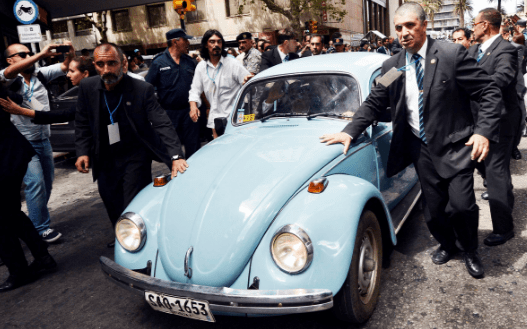
Señor Mujica’s beat-up old VW Beetle is probablemente unos de los cars más famosos en el mundo, y decidió also to forgo the luxury of el Palacio Presidenciál.
jm3

La escalera = the ladder

No sé = I don’t know

“As soon as politicos start climbing up la escalera, they suddenly become kings. No sé how it works, but lo que sí sé is that republics came al mundo to make sure that no one es más than anyone else.” The pomp of office, he said, is like something left over from a feudal pasado: “You need un palacio, red carpet, muchas personas behind you saying, ‘Sí señor.’ En mi opinión all of that is awful.”

Casa = home

Hombre = man (“ombray”)

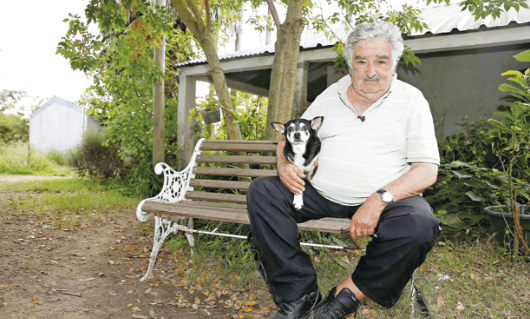
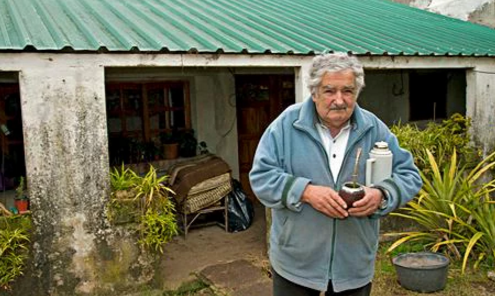
When you visita “Pepe” at his tiny, one-storey casa on the outskirts of Montevideo you realize que el hombre is as good as his word.
jm2

Amigos = friends

Señor Mujica seats himself down on a simple wooden stool delante de a bookshelf that seems on the verge of collapsing under the weight of biographies and mementos from his political adversaries and amigos.

Trece años = 13 years (“tresay anyos”)

Books are importante to the former guerrilla fighter who spent a total of 13 trece years in jail, two of them lying at the bottom of an old horse trough.

Su pasado = his past

La experiencia de su pasado es probablemente why Señor Pepé Mujica gives away about 90%, noventa porcienta of his salary to charity.

Describe = describes (“descreebay”)

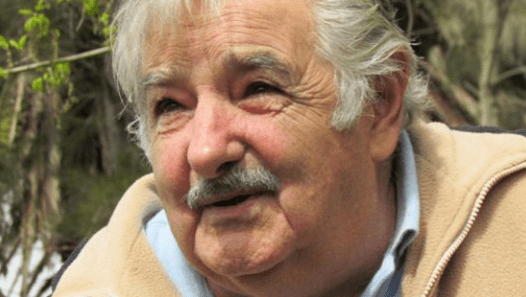
Señor Mujica describe being perplexed by those who question his lifestyle.
jm4

Cosas = things

“Este mundo is crazy, loco! People are impresionada by cosas normales and that obsession worries me!”

Una vida = a life

Not afraid to take a swipe at his otros líderes, he adds: “All I do is live like la mayoria of my people, no la minoria. I’m living una vida normal y los líderes en Italia, España should also live as their people do. They shouldn’t be aspiring to or copying a rich minoria.”

jm10

Más pobre = poorest (“más pobray”)

He has been dubbed el Presidente más pobre del mundo, but he refutes this.

El más pobre = the poorest

“I’m not el presidente más pobre. El más pobre is the one who mucho to live. Mi estilo de vida es una consecuencia of my wounds. I’m the son of my historia. There have been años when I would have been contento just to have a mattress.”

Un estilo de vida = a lifestyle

Soy presidente = I am a president (“presidentay”)

“I have un estilo de vida that I don’t cambia just because soy presidente. I earn more que necesito, even if no es suficiente for others. Para mi, no es sacrificio, it’s a duty.”

jm1

Jose Mujica is outspoken and sometimes brusque, but he can afford to be so.

Más grandes = bigger

Señor Mujica left office with a relatively healthy economia and with social stabilidad those neighbours más grandes, como Argentina y Brasil, could only dream of.

Unos de los politicas más controversiales from his five years, cinco años de Presidente – like the legalisación del aborto y of abortion and canabis – were done for pragmatic reasons.

El amor = love

El hombre = the man (“el ombray”)

“Marijuana is una plaga, another adicción. Some say es bueno, but no, that’s rubbish. No marijuana, tabaco ni alcohol – la única good adicción is el amor!” says el hombre who in 2005 married his long-term partner and former co-revolutionary, Lucia Topolansky.

jm9

Es porque = is why (“es porkay”)

“But 150,000 personas smoke marijuana here and I couldn’t leave them at the clemencia of drugs traffickers,” he says. “It’s easier to controlar something if it’s legal and es porqué we’ve done this.”

El jefe = the boss (“el hefay”)

He was also el jefe who oversaw the legalisación de aborto y de same sex marriage. 

Venga = come on

Para nosotros = for us

El mundo = the world

“We applied a very simple principio: reconoce the facts. Aborto is old as el mundo. Gay marriage, ¡por favor! — it’s older que el mundo. We had Julius Caesar, Alexander the Great, por favor. To say it’s moderno, venga, it’s older que nosotros. Es una realidad objectivo que existe.  Para nosotros, no legalizarlo would be to tortura people needlessly.”

jm8

Señor Mujica is sometimes describido as “el presidente every other country would like to have.”

Ni nada así = nor anything like that

La vida = life

“There’s nothing short-term, no victoria around the corner. I will not achieve paradiso ni nada así. What I want is the fight for the common good to progresar. La vida slips by. The way to prolongarlo is for others to continuar your work.”

Humilde = humble (“oomilday”)

Este líder enigmático remains una inspiración to many, and is a reminder that la política is meant to be una profesión humilde y honorable.

Article adapted from a combination of text from the following sites.

http://www.bbc.co.uk/news/world-latin-america-31679475

https://mic.com/articles/92369/15-powerful-quotes-from-the-world-s-most-humble-president 

Cesar Chavez (1927 – 1993)

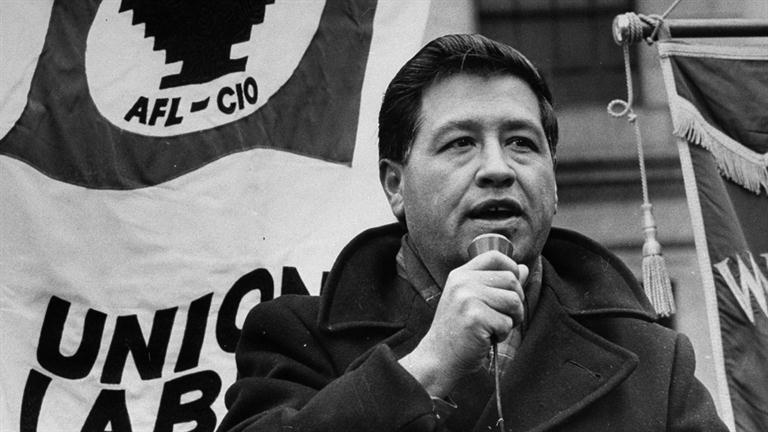
César Chávez era un Mexicano-Americano que trabajaba en la agricultura. ¿Entiendes? Do you understand? ¿Sí? He worked in agricultura.

Read along with me. Pause if you need to.

Era activista de las derechas civiles. César Chávez nació, was born, en la granja, the farm, de su familia near Yuma, Arizona. Chávez witnessed the harsh conditions sufridos by workers on granjas. Los trabajadores, the workers, were often unpaid. They lived in shacks a cambio de su trabajo, without servicios básicos.

Tomar un minuto to try to remember what you just read. Imaginar an image to go with el texto.

Chávez dedicó su vida to winning reconocimiento for los derechos, the rights of los trabajadores. He helped to organizar los trabajadores to formar The National Farm Workers Association, La Asociación Nacional de los Trabajadores Agricultores.

Repite el proceso. La creación de un imágen mental helps to formar conexiones en el cerebro.

Through marches, strikes and y boicots, Chávez obligó a los empleadores a pagar adequate wages and provide otros beneficios. Él era responsable de la legislación enacting the first Bill of Rights for workers agrícolas.

What do you think “él era responsable” means? Ask in the comentarios if you have any doubts, dudas.

Los trabajadores agrícolas have the lowest annual family incomes of any U.S. workers. They are excluidos de la mayoría of minimum wage and hour garantías, and do not have el derecho the right to overtime pay.

Este parráfo se trata del presente, no del pasado. ¿Entiendes? Do you understand.

Los trabajadores agrícolas are exposed to pesticidas tóxicos, which have been linked to health problems incluyendo problemas reproductivos, birth defects, and varias condiciones tales como cáncer, diabetes and Alzheimer’s disease.

Would you like to trabajar en la agricultura en Los Estados Unidos? Do you think los américanos want to? Do you think los méxicanos want to?

Esclavitud = slavery
There have been multiple recognized casos de esclavitud moderna in the fields in the United States, los campos de Los Estados Unidos. Trabajadores agrícolas living in indentured servitude are held as esclavos through threats, violencia, coerción y manipulación.

¿Qué piensas? ¿Do you think la esclavitud es común o poco común? This article is not referenced. Do you think it is verdad, true? Read on!

Los trabajadores agrícolas often live in substandard housing with unsanitary condiciones. En muchos casos, the property owner has a monopoly on the housing, which allows him or her to charge precios altos in rent for these poor living conditions.

Los niños as young as 12 can be contratados para la granja work according to federal law. Farm workers as young as 16 perform dangerous tasks que están legalmente prohibidos en otras industrias.

Los niños de familias de trabajadores migrantes have the lowest high school graduation rate in the country, alrededor del 10%. Many must work to help a sus padres make ends meet, and they change schools every time que su familia travels for seasonal work.

Most farm workers also lack de protecciones laborales básicas such as workers’ compensation, health insurance and disability insurance. Necesitan a una persona como César Chávez ahora más que nunca.

You have llegado al final de the reading task. Tomar un minuto to escribir unas notas about what you can remember, recordar. If you can, put some of your notas en español. I would love to see what you have escrito!

Las opiniones de César Chávez

We must admit our lives are all that really belong to us. Debemos admitir que nuestras vidas son todo lo que realmente nos pertenecen.

The fight is never about grapes or lettuce. La lucha nunca es uva o lechuga. It is always about people. Se trata siempre de personas.

Our language is the reflection of ourselves. Nuestra lengua es el reflejo de nosotros mismos.

Click here to go back to the 4 tareas de la semana.